- The College Crest by Lets Unbound
- Posts
- 10 Competitive Summer Programs for High School Students - Part 2
10 Competitive Summer Programs for High School Students - Part 2
High impact summer opportunities designed for ambitious students


The College Crest by Lets Unbound & Nishant Chawla
February 01, 2026

Competitive summer programs can play a powerful role in a high school student’s academic and personal development. Beyond exposure to advanced coursework, these programs offer selective cohorts, mentorship from experts, and the chance to explore fields at a pre university level. Many are highly competitive, with acceptance rates similar to top colleges.
Here are 10 competitive summer programs for high school students - part 2, along with key details to help you evaluate which ones align best with your goals.


Location: Stanford University, California, USA
Cost: Free, includes stipend
Program Dates: June to August
Eligibility: High school juniors and seniors aged 16 and above
Acceptance rate or cohort size: Around 50 to 60 students
SIMR places students in active biomedical research labs at Stanford University, where they conduct hands on research in fields such as cancer biology, neuroscience, bioengineering, immunology, and genomics under faculty and graduate mentor supervision.
Why it stands out:
Students gain authentic exposure to medical and biological research rather than classroom simulations. The emphasis on lab responsibility, data analysis, and scientific communication makes SIMR one of the strongest pre medical and life sciences research programs for high school students.

Location: The Rockefeller University, New York, USA
Cost: Free, includes stipend
Program Dates: June to August
Eligibility: High school juniors and seniors
Acceptance rate or cohort size: Around 30 students
The Summer Science Research Program at Rockefeller University immerses students in full time biomedical research. Participants work in active laboratories under the mentorship of leading scientists and present their findings at the end of the program.
Why it stands out:
This is one of the most research intensive summer programs for high school students. Students gain authentic lab experience in a world class research environment rather than simulated projects.
What matters most to you when choosing a competitive summer program? |

Location: Texas Tech University, Texas, USA
Cost: Free, includes housing and meals
Program Dates: June to August
Eligibility: High school juniors and seniors
Acceptance rate or cohort size: 12 students
Clark Scholars conduct intensive research in STEM fields under direct faculty mentorship, culminating in academic papers and presentations.
Why it stands out:
Extremely small cohort size allows for deep, individualised research guidance rarely available to high school students.

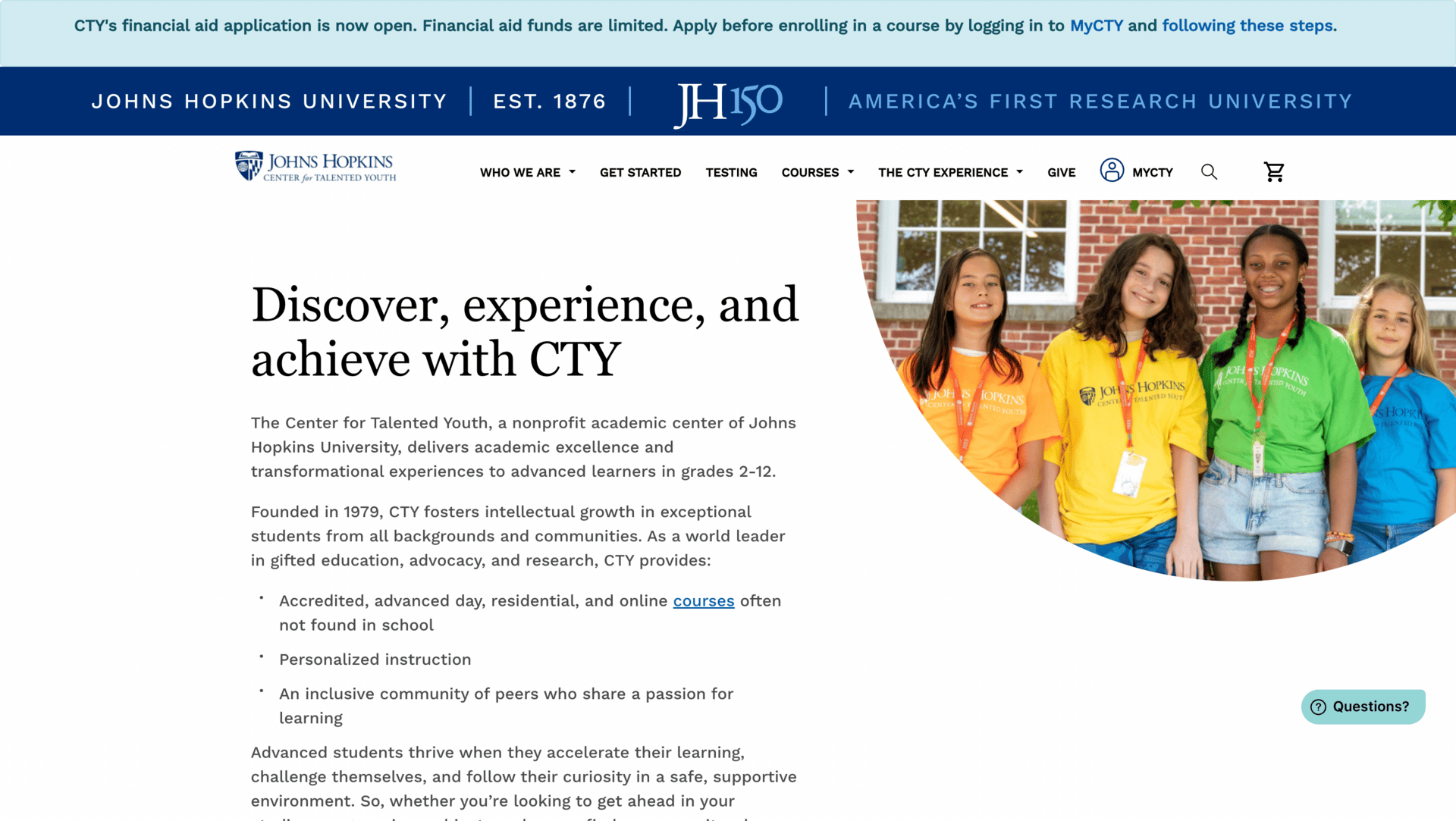
Location: Multiple university campuses
Cost: Approximately USD 4,000 to 6,000
Program Dates: June to August
Application Deadline: Rolling
Eligibility: Students qualifying through CTY assessments
Acceptance rate or cohort size: Selective, course dependent
CTY offers accelerated courses in mathematics, science, writing, and humanities designed for academically advanced students.
Why it stands out:
Students move at a faster academic pace and engage with peers who share similar intellectual intensity.
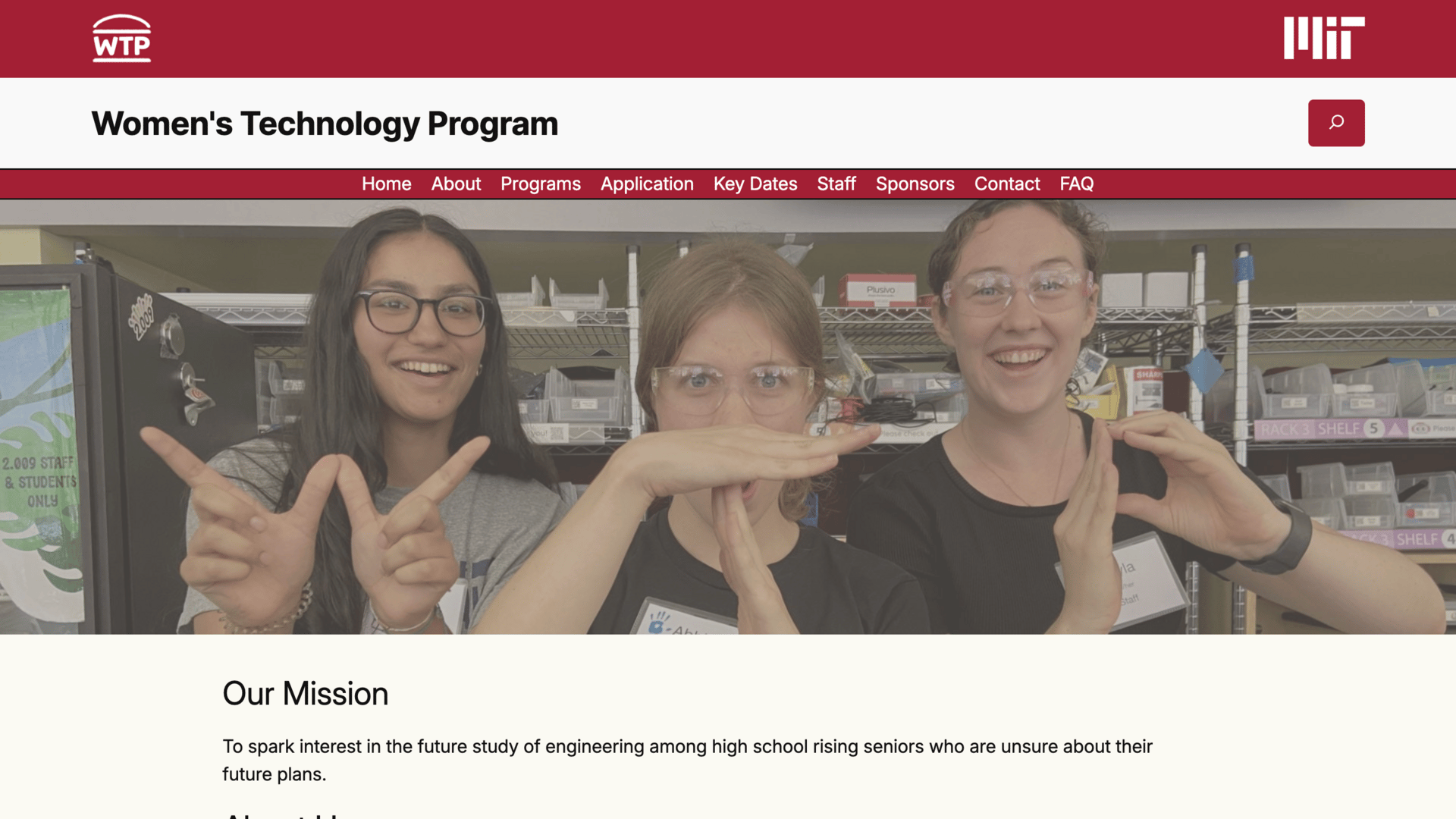
Location: Massachusetts Institute of Technology, Cambridge, USA
Cost: Free, includes housing and meals
Program Dates: June to July
Eligibility: Rising high school seniors identifying as female
Acceptance rate or cohort size: Highly selective
WTP Mechanical Engineering introduces students to core engineering concepts through hands on labs, design challenges, and collaborative problem solving led by MIT faculty and students.
Why it stands out:
The program combines academic rigor with mentorship and representation. Students leave with strong technical foundations and confidence to pursue engineering at the highest level.

Location: Somerset, United Kingdom
Cost: Paid, with scholarships available
Program Dates: Summer
Eligibility: High school students with strong interest in AI and logic
Acceptance rate or cohort size: Selective, small cohorts
The Program on AI and Reasoning focuses on foundational thinking behind artificial intelligence, including logic, problem solving, and algorithmic reasoning. Students engage in projects that bridge computer science, mathematics, and philosophy.
Why it stands out:
Unlike coding bootcamps, this program emphasises how AI systems think and reason. It is ideal for students interested in theoretical depth rather than surface level applications.


Location: University of Texas at Austin, USA
Cost: Free
Program Dates: Summer
Eligibility: High school students with programming interest
Acceptance rate or cohort size: Competitive
This program introduces students to robotics, high-performance computing, and applied programming through projects hosted by the Texas Advanced Computing Center.
Why it stands out:
Students work with real computing infrastructure and applied robotics challenges. The program bridges coding skills with engineering applications.

Location: University of Pennsylvania, USA
Cost: Approximately USD 7,000
Program Dates: July
Eligibility: High school students
Acceptance rate or cohort size: Selective
UPenn Summer Academies offer specialised tracks in fields like neuroscience, law, global health, and experimental psychology.
Why it stands out:
Students gain early exposure to niche academic disciplines taught by university faculty.
Do you need expert help to find the right summer programs for you? |

Location: NYU Tandon School of Engineering, New York, USA
Cost: Free, includes stipend
Program Dates: June to August
Eligibility: High school juniors from underrepresented backgrounds
Acceptance rate or cohort size: Around 70 students
ARISE places students in university research labs where they work on engineering and applied science projects alongside NYU faculty and graduate mentors.
Why it stands out:
Students experience the expectations of collegiate research early. The program emphasises long term mentorship and preparation for STEM majors.

Location: Princeton University, Princeton, New Jersey, USA
Cost: Free, fully funded including housing, meals, and travel
Program Dates: July to August
Eligibility: High school juniors from low income backgrounds with an interest in journalism
Acceptance rate or cohort size: Around 40 students
The Princeton Summer Journalism Program is a highly selective residential program that introduces students to the fundamentals of journalism and media studies. Participants study reporting, feature writing, ethics, and multimedia storytelling while learning directly from professional journalists and Princeton faculty.
Why it stands out:
PSJP combines rigorous academic instruction with access to a world class journalism network at no cost. The program prioritises intellectual curiosity, writing ability, and storytelling potential over prior journalism experience, making it especially impactful for students with limited access to such opportunities.
Final Thoughts
Competitive summer programs are not about collecting brand names. Admissions officers value depth, commitment, and learning outcomes more than participation alone. The right program should align with your academic interests, personal goals, and readiness for challenge.
When choosing a summer program for 2026, focus on fit, not prestige. A well chosen experience can shape your academic direction, strengthen your skills, and give you clarity that lasts far beyond one summer.
At a Glance ⚡️
10 Competitive Summer Programs for High School Students in 2026
1. Understand What Makes a Program Competitive
📍 Selective programs value depth, readiness, and academic curiosity.
📍 Low acceptance rates usually reflect high expectations, not just prestige.
2. Look Beyond the Program Name
📍 Focus on curriculum, mentorship, and learning outcomes.
📍 A lesser known program with real rigor can be more impactful than a famous one.
3. Check Eligibility and Timing Early
📍 Many programs are limited to specific grades or age groups.
📍 Deadlines often fall 6 to 9 months before the summer.
4. Prioritise Academic Fit Over Popularity
📍 Choose programs aligned with your genuine interests.
📍 Strong alignment leads to better engagement and outcomes.
5. Evaluate the Learning Experience
📍 Look for research, discussion based learning, or advanced coursework.
📍 Passive participation rarely leads to meaningful growth.
6. Understand Cost and Financial Aid Options
📍 Some of the most competitive programs are fully funded.
📍 Cost alone should never determine whether you apply.
7. Prepare for a Selective Application Process
📍 Expect essays, recommendations, and academic records.
📍 Applications often assess thinking, motivation, and initiative.
8. Focus on Outcomes, Not Just Attendance
📍 Strong programs produce tangible skills, research, or projects.
📍 Outcomes matter more than participation certificates.
9. Reflect on How the Experience Fits Your Long Term Goals
📍 Think about how the program supports your academic direction.
📍 The right summer experience builds clarity, not just credentials.

—--------------------------------------
Amol & Nishant,
The College Crest - Powered by Lets Unbound,
We have worked with thousands of students over the past 7 years. This newsletter captures the essence of our insights to simplify the college readiness journey.

Successful admissions to globally ranked universities, built on academic strength, profile depth, and long-term vision.