- The College Crest by Lets Unbound
- Posts
- How to Create Impactful Community Service Projects (With Measurable Outcomes)
How to Create Impactful Community Service Projects (With Measurable Outcomes)
How students can lead community initiatives that create real results


The College Crest by Lets Unbound & Nishant Chawla
January 18, 2026

Community service is often misunderstood as a checklist activity. Something students do to collect hours, add a line to their résumé, or appear well-rounded on a college application. In reality, colleges are far less interested in how many hours you completed and far more interested in why you served, what problem you addressed, and what changed because of your work.
An impactful community service project is not defined by scale or visibility. It is defined by clarity of purpose, depth of involvement, and measurable outcomes. When approached thoughtfully, community service can become one of the strongest indicators of initiative, leadership, and maturity in a student’s profile.

Why Should You Do Community Service?
At its core, community service helps students develop perspective.
Working with communities outside your immediate environment builds empathy and awareness of real-world challenges that cannot be replicated in classrooms. It teaches you to listen, adapt, and respond thoughtfully.
From a skills standpoint, meaningful service develops leadership, communication, problem-solving, and collaboration. These are qualities colleges consistently look for because they signal readiness for life beyond academics.
Most importantly, community service helps students understand that impact does not require grand gestures. Small, focused efforts that genuinely help others often lead to the deepest learning.
Why Should You Start a Community Service Project?
While joining existing initiatives is valuable, starting your own project demonstrates a higher level of ownership.

When you initiate a project, you are not just participating. You are identifying a problem, designing a solution, managing execution, and evaluating results. This process reflects initiative and independent thinking, traits colleges value more than passive involvement.
Admissions officers consistently respond well to projects where students:
Took responsibility instead of following instructions
Addressed a specific, real need
Sustained effort over time
Clearly articulated outcomes and learning
Starting your own project also allows you to align service with your interests, whether in education, healthcare, technology, environment, or social impact.

Steps for Starting a Successful Community Service Project
1. Identify a Real Problem
Start by observing your immediate surroundings. Your school, neighborhood, local hospital, shelter, or community center can reveal many unmet needs.
Ask simple questions:
Who is struggling here?
What problem keeps repeating?
What help is missing?
A strong project solves a specific problem. For example, instead of saying “I want to help underprivileged children,” narrow it down to “Students in my area lack access to basic math tutoring.”
2. Understand the Community
Do not assume you already know the solution. Speak to the people affected. Talk to teachers, parents, volunteers, or community leaders.
Ask them:
What challenges do you face?
What has already been tried?
What kind of help would actually be useful?
This step prevents wasted effort and ensures your project is relevant.
3. Define Clear Goals
Your project should have clear and realistic goals.
Bad goal: Improve education in my community.
Good goal: Help 30 middle school students improve their math scores by one grade level in three months.
Clear goals make your project focused and easier to evaluate.
What kind of support would help you most with community service projects? |
4. Design the Solution
Now decide how you will address the problem.
This could include:
Weekly tutoring sessions
Awareness workshops
Resource distribution drives
Digital tools or content creation
Keep the solution simple. A small, well-executed project is better than an ambitious idea you cannot sustain.
5. Decide How You Will Measure Impact
This is where most students struggle, but it is also what makes a project impactful.
Think about measurable outcomes such as:
Number of people served
Hours of instruction delivered
Improvement in test scores or skills
Attendance rates before and after
Feedback surveys
For example:
Taught 25 students over 8 weeks
Conducted 16 sessions totaling 40 hours
72 percent of students improved their math test scores
Numbers make your work credible and visible.
6. Build a Small Team
You do not need a large group. Even two or three committed people are enough.

Assign clear roles such as:
Project coordination
Teaching or execution
Data tracking and documentation
Working in a team also shows collaboration and leadership.
7. Execute and Adapt
Once you start, expect challenges. Attendance may drop. Resources may fall short. Plans may need changes.
This is normal.
Track what works and what does not. Adapt your approach based on feedback. Growth often comes from adjusting rather than sticking rigidly to the original plan.
8. Document Everything
Keep records of:
Planning process
Photos or videos of activities
Attendance lists
Results and feedback
This documentation helps you reflect on your learning and clearly present your work in applications or interviews.
Strong documentation goes beyond listing activities and focuses on what the experience taught you.

How to Write About Community Work in Your College Essay (With Example)
Your essay should focus less on what you did and more on why it mattered.
Keep these points in mind:
Start with the problem you noticed, not the solution
Explain your motivation and what pushed you to act
Highlight one or two key moments that changed your perspective
Show learning, growth, or a shift in thinking, not just success
Briefly mention outcomes, but emphasize impact on you and others
Think of your community work as a lens into your values, curiosity, leadership, and empathy.
Example:
I first noticed the problem during after-school hours, when several younger students stayed back simply because they had no one at home to help them with homework. What began as informal help sessions turned into a structured tutoring program. Over time, I learned that leadership was not about having answers, but about showing up consistently. Watching students gain confidence mattered more to me than improved test scores, and it reshaped how I view responsibility and impact.
How to Add Community Work in the Common App Activities Section
This section is about clarity and evidence, not storytelling.

Example (Activities Section):
Activity Type
Community Service (Volunteer)
Position / Leadership Description
Founder & Lead Tutor
Organization Name
Community Math Tutoring Initiative
Activity Description
Founded and led weekly math tutoring for 25 middle school students; coordinated 3 volunteers, delivered 40+ hours of instruction; 70% improved grades.
Recognised Awards for Community Service Projects
Well-structured community service projects can also lead to formal recognition and awards, especially when they demonstrate leadership, sustained effort, and measurable impact. Here are some well-known options students often receive or aim for:
The Diana Award
Recognises young people for social action and humanitarian work. Strong emphasis on impact, leadership, and long-term commitment.The Duke of Edinburgh’s Award (DofE)
Popular globally. Community service is a core component, assessed over sustained periods.The International Award for Young People
The international version of DofE, recognised in many countries including India.Prudential Spirit of Community Awards
Honors middle and high school students for outstanding volunteer service.President’s Volunteer Service Award
Based on verified volunteer hours and impact, widely recognised in US applications.School or NGO-Level Awards
Many schools, local NGOs, and city councils offer leadership or social impact awards for student-led initiatives.
Awards are a byproduct, not the goal. Admissions officers care more about what you did, why it mattered, and what changed because of your work. A strong project with measurable outcomes often qualifies naturally for recognition.
If your community service project helped people but lacked measurable outcomes, would you want expert guidance? |
Tips to Make Your Project Easier
Start small and local. Impact matters more than scale.
Use existing spaces like schools, libraries, or community halls.
Partner with a teacher, NGO, or local organization for guidance.
Set a timeline so the project does not become overwhelming.
Focus on consistency rather than perfection.
Reflect on what you learned, not just what you achieved.
Final Thoughts
An impactful community service project is not about impressing others. It is about understanding a problem, taking responsibility, and creating meaningful change.
When your work has measurable outcomes, it becomes more than a good intention. It becomes evidence of your ability to think critically, lead with empathy, and follow through on ideas.
Whether you serve ten people or a hundred, what matters is clarity of purpose and depth of impact. Start where you are, use what you have, and focus on making your effort count.
At a Glance ⚡️
How to Create Impactful Community Service Projects (With Measurable Outcomes)
1. Start With a Real, Local Problem
📍 Look around your school or community to identify unmet needs.
📍 Strong projects solve specific problems, not vague causes.
2. Understand the Community Before Acting
📍 Speak to the people affected and those already working in the space.
📍 Listening first helps you design relevant and useful solutions.
3. Set Clear and Achievable Goals
📍 Define exactly what success looks like for your project.
📍 Clear goals keep your work focused and realistic.
4. Design a Simple, Focused Solution
📍 Choose actions you can execute consistently with available resources.
📍 Small, well-run initiatives often create deeper impact.
5. Build Measurable Outcomes Into the Project
📍 Track numbers like people served, hours contributed, or skills improved.
📍 Measurable results turn effort into credible impact.
6. Take Ownership and Show Initiative
📍 Starting and leading a project demonstrates responsibility and leadership.
📍 Ownership matters more than the size of the project.
7. Execute, Learn, and Adapt
📍 Expect challenges and be willing to adjust your approach.
📍 Growth comes from problem-solving, not perfect execution.
8. Document Your Work and Results
📍 Maintain records, photos, feedback, and data throughout the project.
📍 Documentation helps you clearly communicate your impact.
9. Reflect on Learning and Impact
📍 Think about what the experience taught you about people and yourself.
📍 Reflection adds depth and meaning beyond numbers and outcomes.

—--------------------------------------
Amol & Nishant,
The College Crest - Powered by Lets Unbound,
We have worked with thousands of students over the past 7 years. This newsletter captures the essence of our insights to simplify the college readiness journey.
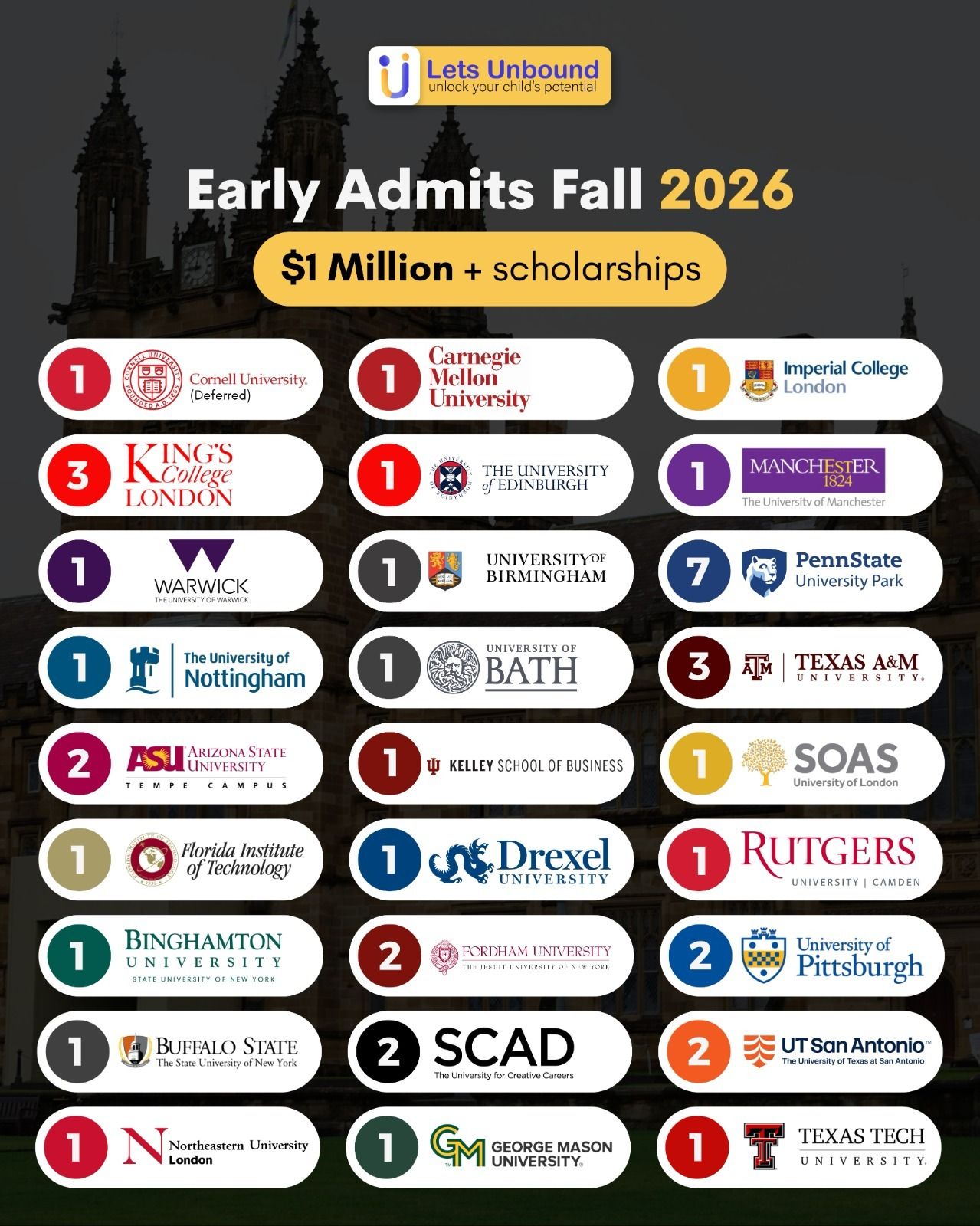
Successful admissions to globally ranked universities, built on academic strength, profile depth, and long-term vision.