- The College Crest by Lets Unbound
- Posts
- How to Turn Any Hobby Into a Spike Activity for Admissions
How to Turn Any Hobby Into a Spike Activity for Admissions
What colleges really look for beyond grades and test scores


The College Crest by Lets Unbound & Nishant Chawla
January 11, 2026

Most students think spike activities are reserved for prodigies. Olympiad winners. National athletes. Students who started coding at age eight or published research with professors.
That belief stops many students from using their real strengths.
The truth is simple: any genuine hobby can become a spike activity if you develop it with intention, depth, and impact.
Admissions officers are not searching for perfection. They are searching for clarity. They want to understand who you are, what you care about, and how you use your interests to create value.
This article will show you how to turn any hobby into a credible spike activity for college admissions.

First, What Is a Spike Activity?
A spike activity is not just something you only enjoy.
It is an activity where you demonstrate:
Depth over time
Increasing responsibility or skill
Measurable outcomes
Personal motivation
Real-world impact
A spike answers one core question for admissions officers:
If we remove grades and test scores, what would still make this student memorable?
Your hobby can answer that question if you build it the right way.
Step 1: Identify the Real Core of Your Hobby
Most students describe hobbies too vaguely.
Instead of:
I like photography
I enjoy baking
I play football
I like reading
You need to go deeper.
Ask yourself:
What exactly do I enjoy about this hobby?
What problems or themes interest me inside this hobby?
How do I spend my time when no one is watching?
Examples
Photography | Baking | Reading |
|---|---|---|
Is it storytelling? | Nutrition? | A specific genre? |
Social issues? | Cultural recipes? | Literary analysis? |
Portraits? | Small business? | Social commentary? |
Nature and conservation? | Food science? | Writing inspired by books? |
This clarity will guide everything else.
Step 2: Move From Consumer to Creator
A hobby becomes a spike when you move beyond only consuming and begin creating.
This does not mean that a consumer mindset is wrong.
Consuming is how interest begins. It is how you learn, explore, and build taste. Every strong creator starts as a consumer.
However, for admissions, creation is what demonstrates initiative.
Admissions officers value what you do with your interest more than raw talent alone.

Consumer Mindset | Creator Mindset |
|---|---|
Playing football with friends | Training younger players |
Reading books | Writing book reviews or essays |
Watching cooking videos | Developing original recipes |
Browsing photography pages | Producing themed photo series |
Your goal is to produce output.
Output can include:
Articles
Performances
Events
Products
Communities
Resources
No output means no evidence.
Step 3: Add Structure and Consistency
A spike activity is not accidental.
You need structure.
That means:
Regular time commitment
Clear goals
Progress over months or years
Admissions officers can spot random participation instantly.
Example
Instead of:
"I play guitar sometimes"
Show:
Practiced 5 hours per week for 3 years
Learned music theory independently
Performed at school and local events
Composed original pieces
Structure signals seriousness.

Step 4: Build Impact Beyond Yourself
This is where hobbies turn into spikes.
Ask:
Who benefits from my hobby?
How does it help others?
What problem does it solve?
Impact does not need to be global.
It needs to be real.
Hobby | Impact Ideas |
|---|---|
Sports | Coaching younger students |
Art and Design | Designing posters for nonprofits |
Writing | Publishing a newsletter |
Cooking or Baking | Hosting workshops |
Gaming | Creating strategy guides |
Impact transforms passion into leadership.
Which part of a spike activity feels hardest? |
Step 5: Show Growth and Challenge
Admissions officers care about trajectory.
They want to see:
Increasing difficulty
Higher standards
New responsibilities
Avoid staying at the same level.
Weak progression
Participated every year
Enjoyed the activity
Strong progression
Started independently
Faced challenges or failures
Improved skills
Took leadership
Expanded scope
Document:
What you struggled with
How you improved
What changed because of your effort
Growth shows maturity.
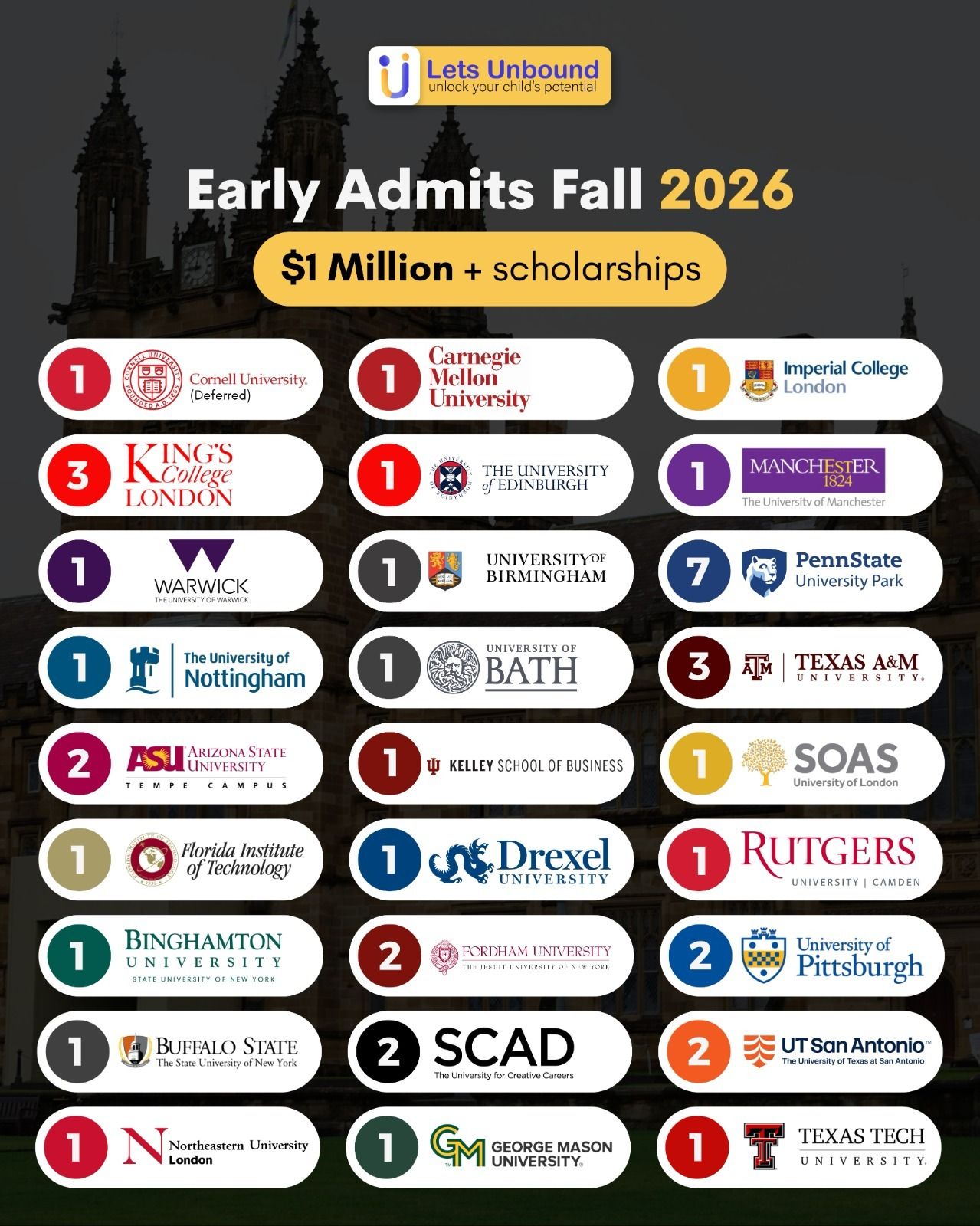
Successful admissions to globally ranked universities, built on academic strength, profile depth, and long-term vision.
Step 6: Create Proof and Documentation
A spike must be verifiable.
Collect evidence such as:
Portfolios
Would you like a free expert session on building a strong digital portfolio? |
Websites
Certificates
Media coverage
Testimonials
Metrics
Metrics can include:
Number of people taught
Articles published
Revenue raised
Audience reached
Projects completed
Admissions officers do not expect perfection.
They expect credibility.
Step 7: Connect the Hobby to Your Academic Direction
Your spike becomes stronger when it aligns with your intended major or values.
This does not mean forcing a connection.
It means explaining the connection honestly.
Examples
Photography → Journalism, Media Studies, Sociology

Cooking → Nutrition, Chemistry, Entrepreneurship
Sports → Kinesiology, Psychology, Leadership
Reading and Writing → Literature, Law, Public Policy
Gaming → Computer Science, Design, Behavioral Science
Your hobby should reinforce your academic story, not contradict it.
Step 8: Reflect on Why It Matters to You
This is where essays come in.
A spike is not just what you did.
It is why you kept doing it.
Strong reflection includes:
Personal motivation
Emotional connection
Lessons learned
Changes in perspective
Avoid exaggeration.
Authenticity is more powerful than drama.
Admissions officers can tell when a hobby is genuine.
Common Mistakes Students Make
Avoid these traps:
Treating hobbies as fillers
Chasing trendy activities only for admissions
Overloading with too many unrelated activities
Ignoring documentation
Starting everything too late
One deep activity is more powerful than ten shallow ones.
A Simple Framework to Remember
Use this checklist to evaluate your hobby:
Do I spend consistent time on it?
Do I create something tangible?
Does it impact others?
Can I show growth over time?
Can I explain why it matters to me?
If the answer is yes to most of these, you are already building a spike.
If expert guidance could turn your hobby into a strong spike, would you explore it? |
Bonus: Common App Activities Section (Under 150 Characters)

Activity Example: Photography
Created themed photo series on local communities; published work online, mentored beginners, and used visual storytelling to highlight social issues.
Final Thought
You do not need to invent a new interest.
You need to take your existing interest seriously.
Admissions officers are not impressed by perfection.
They are impressed by students who:
Care deeply
Act consistently
Create value
Reflect honestly
Your hobby is not a distraction from admissions.
Handled well, it can become the strongest part of your application.
Start where you are.
Build with intention.
And let your interests speak for you.
At a Glance ⚡️
How to Turn Any Hobby Into a Spike Activity for Admissions
1. Start by Understanding What a Spike Really Is
📍 A spike activity shows depth, consistency, and impact, not just participation.
📍 It answers why you are memorable beyond grades and test scores.
2. Identify the True Core of Your Hobby
📍 Go beyond saying what you like and define what specifically excites you within that hobby.
📍 Clarity helps you build direction, focus, and a strong admissions narrative.
3. Shift From Consuming to Creating
📍 Watching, reading, or playing is only the starting point.
📍 Creating output like projects, content, events, or resources turns interest into evidence.
4. Add Structure and Long-Term Commitment
📍 Consistent time, clear goals, and progress over months or years matter.
📍 Structure signals seriousness and helps admissions officers see growth.
5. Build Impact Beyond Yourself
📍 Ask who benefits from your hobby and how it helps others.
📍 Real impact can be local, small-scale, and still highly meaningful.
6. Show Growth, Challenge, and Leadership
📍 Strong spikes show increasing difficulty and responsibility over time.
📍 Leadership, initiative, and problem-solving elevate your activity.
7. Document Proof and Results
📍 Portfolios, metrics, testimonials, or published work make your spike credible.
📍 Evidence helps admissions officers verify depth and authenticity.
8. Connect Your Hobby to Your Academic Story
📍 Explain how your hobby aligns with your intended major or future goals.
📍 Honest connections strengthen your overall application narrative.
9. Reflect on Why the Hobby Matters to You
📍 Admissions officers care about motivation, learning, and perspective shifts.
📍 Authentic reflection often matters more than impressive outcomes.

—--------------------------------------
Amol & Nishant,
The College Crest - Powered by Lets Unbound,
We have worked with thousands of students over the past 7 years. This newsletter captures the essence of our insights to simplify the college readiness journey.